

Most practice management software is built around the business of a veterinary practice: scheduling, billing, invoicing, and reporting. Those things matter. But they’re not why most people went into the field.
Instinct was founded by an emergency veterinarian who believed the software running a practice should be built around the patient on the table. Every workflow decision, design choice, and integration helps make patient care safer, more accurate, and/or easier to deliver. It’s the lens through which our products get built. This is why patient safety is a philosophy that runs through everything we do and isn’t limited to a single feature.
Instinct EMR is a PIMS that combines medical excellence with complete practice management, so you can run your clinic with all-in-one trusted software. Book a free, no-pressure demo today.
Four New Instinct Capabilities That Go Deeper
Over the past few months, we have added four new patient safety capabilities to Instinct EMR and Instinct Treatment Plan. Each one closes a specific gap that busy teams encounter every day.
The patient’s weight changed. The medication quantities may need to change, too.
A patient arrives for a planned procedure. The anesthesia sheet was built last week, when the patient was lighter. The technician updates the weight at check-in. The team moves quickly through pre-op. Without a clear prompt, someone has to remember—across a busy shift, with multiple patients—that every weight-based medication on that sheet may now need a second look.
The check is now part of the workflow instead of a memory task. When a patient’s weight change may affect an active dose, Instinct places a persistent banner on the Treatment or Anesthesia Sheet. The care team opens the review, sees the original dose and the dose based on the current weight side by side, selects the appropriate quantity, and confirms before treatment continues. If a selected quantity falls outside the safe dose range for that medication, the system requires explicit acknowledgment.
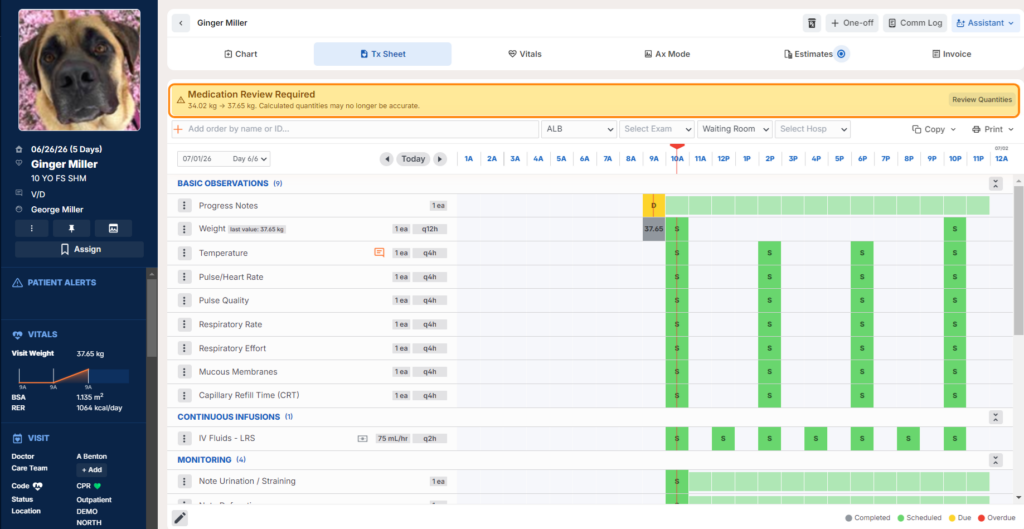
Practices can configure a review threshold per medication—tighter for medications where small weight changes carry greater clinical significance and more lenient for those that don’t. The team doesn’t have to remember to check. Instinct EMR and Instinct Treatment Plan make the gap visible when someone needs to make a decision.
Read this: How the Instinct Team Supports Veterinary Practices Before, During, & After Go-Live
ScribbleVet FAQ: Everything You Need to Know When Starting to Use an AI Scribe
The full medication picture shouldn’t require a scavenger hunt.
A patient arrives as a referral. The internist knows they’re being managed by a GP and an outside provider. What they’re actually taking right now requires asking the owner, searching through visit notes, checking the prescriptions panel, and hoping nothing was documented informally somewhere else.
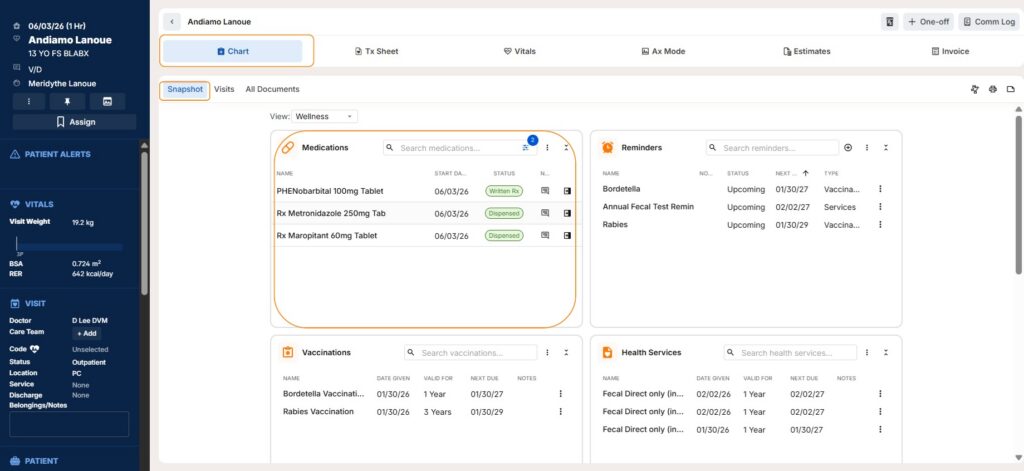
Across every practice type, one of the first things a veterinarian needs before walking into an exam is a clear picture of the medications a patient is actually taking. The information matters. The problem was the process of assembling it.
Instinct EMR and Instinct Treatment Plan now consolidate all medications into a single view on the Patient Snapshot: active prescriptions auto-populate and medications from outside providers are added manually during triage. The care team can confirm what’s current, add anything missing, and discontinue what’s no longer active before the veterinarian even walks into the exam room.
Your controlled-substance policy deserves more than an onboarding conversation.
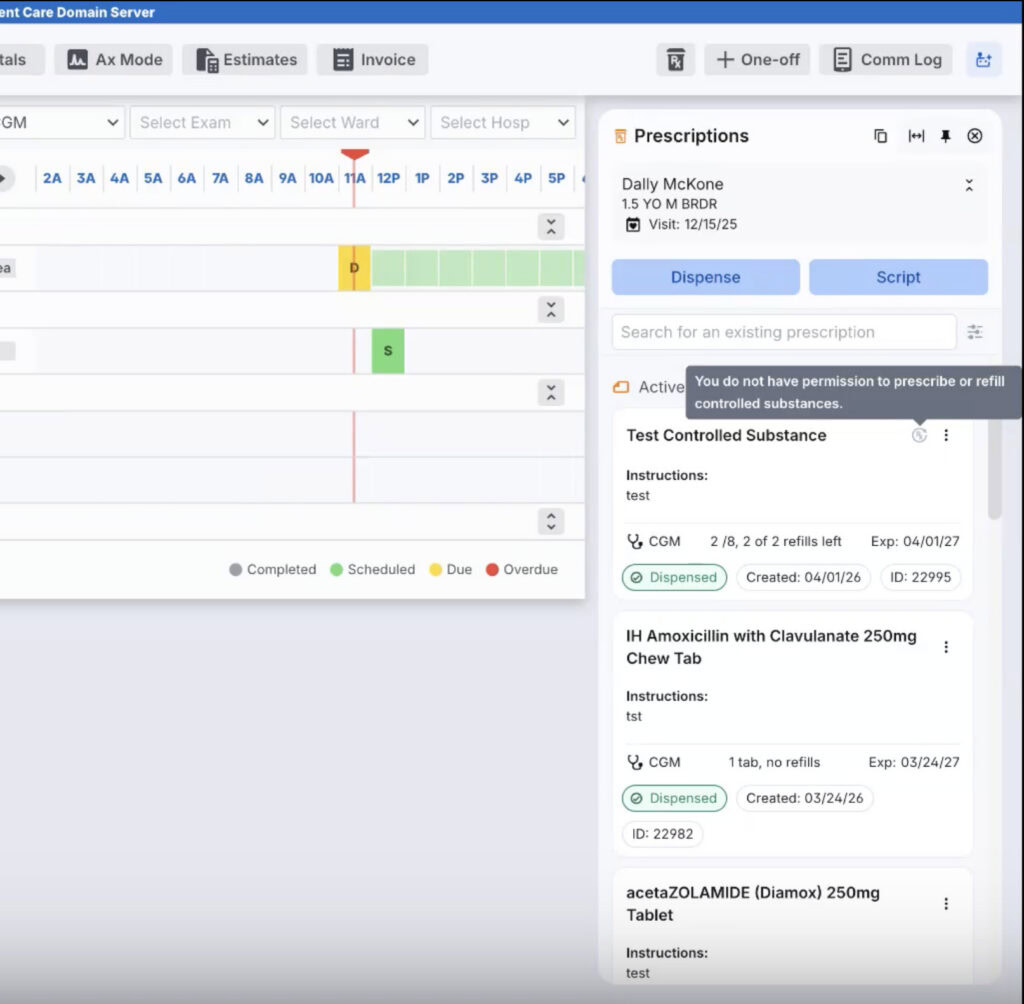
Many practices have clear expectations about which team members can order, prescribe, refill, discontinue, or void controlled substances. The expectations live in an employee handbook, a training conversation, or staff memory. When access isn’t managed in the system, there’s no reliable way to demonstrate that the policy is being applied consistently—including when an inspector asks.
Now, we give practices the ability to configure controlled substance permissions at the role level. Every existing role retains its permissions until an administrator is ready to restrict access for a specific role. That configuration applies immediately to every person in that role and the system enforces what the policy already requires.
Instinct EMR unites medical records and practice management in one modern system. Finally, a PIMS that’s as thoughtful and thorough as the care you provide. Book a demo.
Knowing a chart changed isn’t the same as knowing what changed.
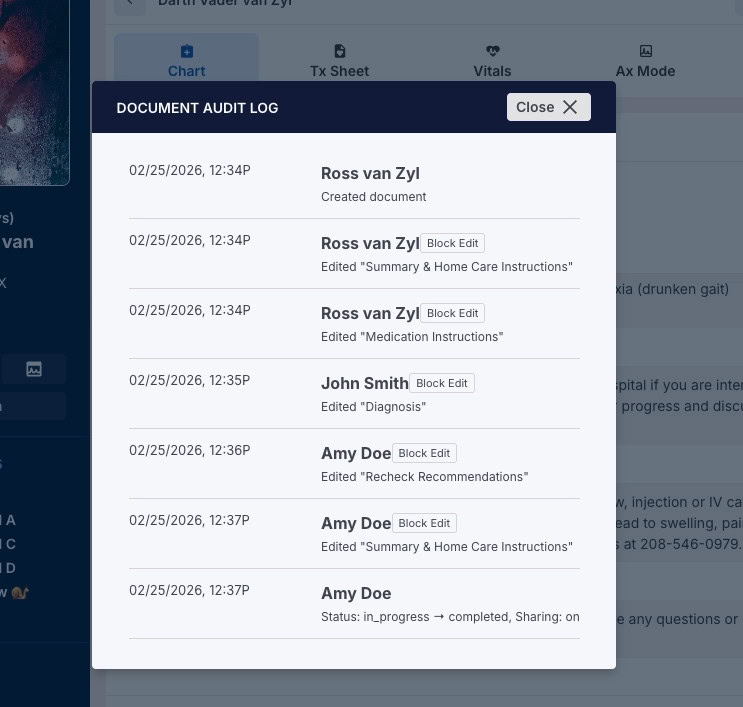
When a practice is reviewing an incident, answering a clinical question, or preparing for an inspection, the audit trail matters. A record that shows someone was in a chart isn’t always enough. The relevant question is usually more specific: which content changed, who changed it, and when.
The chart audit log now extends Instinct’s existing audit trail to capture changes at the content level, not just the chart level. Practices get a detailed, reviewable record of exactly what was edited—the specificity that makes an audit trail useful when it’s actually needed.
Why This Matters for Every Practice Type
One of the most common misconceptions about clinical safeguards is that they’re an ER or specialty concern. The complexity is different in a busy emergency hospital, but the underlying risk—medication errors, incomplete information, inconsistent access, undocumented changes—exists everywhere patients are treated.
Weight changes happen in general practice. Multi-provider medication histories matter in primary care. Controlled-substance compliance isn’t a specialty issue. And the value of knowing who changed a chart doesn’t depend on how many beds a hospital has.
Our software is built to serve the full range of veterinary practice and patient safety infrastructure works the same way: it shouldn’t be something practices have to bolt on later.
Clinical Decision Support for Dyspnea Cases: See Standards in Action
Read: Introducing Instinct’s New AI Features for Clinical Insights at the Point of Care
The Standard We Hold Every Workflow To
Our goal at Instinct isn’t to create a checklist of safety features. What we aim for is a system where the right information is available at the right moment, the right prompts surface before a decision is made, and the right records exist when they’re needed. Patient safety only works when the safeguard is in the same place as the decision.
Instinct EMR already did a pretty good job of that. Plumb’s trusted drug guidance and Standards of Care’s peer-reviewed clinical protocols are embedded directly into the product. No tab-switching, no second tool, no wondering whether the version they’re looking at is current. Then there’s the dosing calculator in the treatment sheet that does the weight-based math at the point of order; warnings that appear when the system detects an unsafe or ineffective dose; and order history records for who added, changed, or discontinued every treatment, among many other features.
And now, our four newest patient safety features add another layer of protection built into the workflow, so clinicians can focus on what they’re actually there to do: care for the patient in front of them.
Feature availability varies by Instinct product and practice type.