

No two veterinarians practice exactly the same way, nor should they. But as a practice grows, differences in training, experience, and clinical habits can make it harder to maintain a consistent approach across the team.
That can affect which questions get asked, which details get checked, and how smoothly cases move between veterinarians and shifts. This article looks at where inconsistency tends to creep in, why it puts more pressure on practice leaders, and how shared clinical guidance can help without limiting individual judgment.
Consistency Isn’t the Same as Identical Care
The word “consistency” can make veterinarians wary when it starts to sound like rigid protocols or cookie-cutter medicine. But when clinicians work from different resources or levels of familiarity, care can vary for reasons that have little to do with the case itself.
Consistency doesn’t require every veterinarian to reach the same answer. It’s making sure the same important clinical questions are considered before care is tailored to the patient. That might mean starting from the same core differentials, remembering a key diagnostic or monitoring step, checking current drug information, or giving the client clear follow-up guidance.
Standards of Care (formerly Plumb’s Pro) gives veterinary teams shared, peer-reviewed guidance at the point of care. See how it supports more consistent care with a free demo.
Shared Guidance Can’t Live in One Person’s Head
Many practices rely on a mix of personal experience, informal mentoring, practice-specific veterinary SOPs, and bookmarked resources to guide clinical decisions. That can leave clinicians piecing together guidance in the middle of a busy day. A new graduate may be unsure how far to work up a case. An experienced veterinarian may know what they need to confirm but not have time to sort through articles, references, and updates between appointments.
Support staff feel the differences, too. When veterinarians approach the same situations differently, technicians may end up learning individual preferences instead of relying on a shared practice approach. That creates more room for confusion during handoffs, treatments, and discharge.
When Growth Puts More Weight on Practice Leaders
As the team grows, practice leaders often become the default source for clinical questions, onboarding, and day-to-day oversight. Medical directors may find themselves reviewing routine workups, answering the same monitoring questions, and trying to write and update veterinary SOPs for common clinical situations, all while managing their own cases.
SOPs still matter for practice-specific expectations, but they take time to build and can be hard to keep current as the medicine changes. And not every clinical question needs another internal document. It can also be difficult to know whether everyone is working from current guidance, especially when some clinicians use personal subscriptions, others rely on books or saved articles, and newer veterinarians depend heavily on whoever is available to ask.
Practice leaders need a way to support newer veterinarians, reduce repeated questions, and help the team approach cases from a more consistent foundation without having to review every case or write every clinical resource themselves.
See what changed when Greenlight Pet ER gave every doctor the same trusted place to turn. Read How Greenlight Pet ER Built Clinical Confidence Across 4 Locations with Standards of Care.
Clinical Guidance From Workup to Follow-Up
Standards of Care gives veterinary teams practical, peer-reviewed guidance on more than 600 clinical topics, kept current by 200+ veterinary and pharmacy experts. Instead of sorting through discussion threads, varying opinions, and multiple references, clinicians have one place to find current, specialist-reviewed information.
Clinical monographs and algorithms help veterinarians work through a case, while step-by-step procedure guides offer support when they need a refresher. Spectrum-of-care guidance helps them adapt recommendations to the patient’s needs and the client’s circumstances. Built-in Plumb’s drug information supports medication decisions, while client handouts give owners clear information to take home.
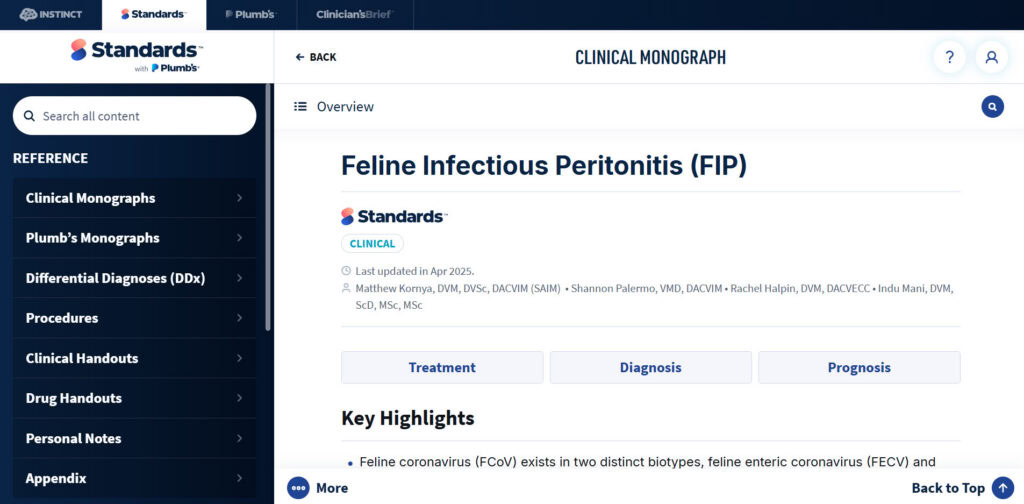
For newer veterinarians, Standards provides a place to think through a case before asking for help, so they can bring more focused questions to the conversation. Experienced clinicians can quickly confirm treatment and monitoring details without searching across multiple resources. Medical directors can spend less time repeatedly supplying information that the team can access on its own.
Want to see how that guidance comes together in a real case? Read Trauma or Something More? A Veterinary Case Walkthrough With Standards.
Support Consistency With Practice-Wide Access
Standards doesn’t prescribe one plan for every patient. It gives the team a common starting point, with room to adjust for the patient, the client, and the veterinarian’s judgment.
An individual subscription can support one veterinarian. A Standards Practice Plan brings the same current clinical guidance to the whole team, so access doesn’t depend on each clinician maintaining their own resources.
That gives practice leaders trusted guidance they don’t have to create and continually update themselves. It also helps clinicians and support staff work from the same information as cases move between veterinarians and shifts.
See how a Standards Practice Plan can support more consistent care across your team. Book a free demo.