
As a long-time overnight ER veterinarian, I have a personal vendetta against legacy veterinary practice information management systems (PIMS). When the server crashes and management is not answering, you are told to go into the dark, dusty, hot server room to restart the system. Clients are angry at waiting. You’re angry because you just lost all your work.
The other scenario is the system upgrade done during your “slow” shift. The tech guy is just staring at you, waiting to give the go-ahead to shut down the lifeline of the practice for “just a little while.” If this scenario sounds familiar, you’re not alone.
Many veterinary practices across the country still rely on legacy, server-based PIMS. If yours is starting to hold your team back, cloud-based software (like Instinct EMR) offers a better alternative. Here are a few signs it may be time to make the switch.
#1: The Server Crash Brings Everything to a Halt
You know the feeling. Every workstation freezes, the phones keep ringing, and your team looks around trying to figure out what to do next. A server crash affects everyone at once, including your nurses, doctors, CSRs, and the pet owners waiting for answers.
Any work that wasn’t saved is gone. Patient notes mid-entry, treatment logs, discharge instructions, and invoices all disappear with it. Your team falls back on paper, memory, and binders filled with practice prices. Treatment plans and invoices are created by hand. Prescription labels are handwritten until the system comes back online.
In a 24-hour emergency hospital, there is no “we’ll deal with it in the morning.” Patients keep arriving. Every minute of downtime puts your team further behind and leaves clients waiting longer. And the real treat? Once the server is running again, someone has to recreate everything recorded on paper or typed into a Word/Google Doc.
Then there’s the server itself. You know it will not last forever, but replacing it can be easy to put off until storage runs low or the hardware fails unexpectedly. Suddenly, your practice is facing a bill of thousands or even tens of thousands of dollars, plus the time required to migrate data and reconfigure the system. That unexpected expense can pull funds away from new medical equipment, additional staff, or other improvements your practice actually planned to make.
#2: Working From Home Is Harder Than It Should Be
Some days, you just want to go home, decompress, and finish your notes in peace. Maybe you need to review a case after dinner or get a head start before the next day’s chaos begins.n Instead, working from home becomes its own IT project.
Accessing a server-based PIMS typically requires a VPN, remote desktop software, and a stable internet connection at both your home and the practice. The computer you are trying to reach must be powered on and connected. If the VPN drops, the practice internet goes down, or either computer has an issue, you are locked out.
Troubleshooting from home can feel impossible. You may need to call IT, only to find that help is available during normal business hours. By the time you get access, the quiet window you had set aside to finish your work is gone.
A system that works reliably only within the practice makes flexibility difficult. Instead of finishing your notes and moving on with your evening, you spend that time trying to connect.
#3: Every Update Requires a Downtime Plan
You are used to your phone and apps updating in the background with little interruption. Updating a legacy PIMS is a different experience. The server has to go offline, the update has to be installed, and everyone has to wait for the system to come back up, hopefully without any new issues.
If your practice closes at night or on weekends, you may be able to find a maintenance window. In a 24-hour emergency or specialty hospital, that window does not exist. Patients do not pause for software updates, and emergencies do not schedule themselves around IT maintenance.
So you are left with a difficult choice. You can postpone the update and continue using software that is missing new features and security improvements. Or you can schedule downtime during a supposedly slower period and hope the ER does not fill up.
Sometimes updates happen during the day because that is when IT support is available. Of course, that is also when your team needs the PIMS to do its job. No matter when you schedule it, someone is disrupted.
#4: New Tools Are Harder (& More Expensive) to Add
Your team sees new veterinary technology that could make the workday easier, including AI scribes, diagnostic integrations, client communication platforms, and payment tools. Then you ask the question that has become all too familiar: “Will it work with our PIMS?”
With a legacy system, the answer is rarely simple.
Connecting a new tool may require custom development, testing, added fees, and ongoing maintenance. Each integration takes more time to implement and creates another potential point of failure. Even when the connection is possible, your practice may decide that the cost or complexity is not worth it.
AI scribes are a common example. Many veterinarians already use them to reduce time spent documenting cases. While many cloud-based systems can connect with these tools more easily, a legacy PIMS may require extra work and an additional price tag. Your team ends up copying and pasting information between systems or skipping the integration entirely.
When every new tool requires a workaround, your PIMS starts limiting the practice instead of supporting it.
Instinct EMR: Veterinary Software of the Future
A cloud-based PIMS should make your team’s work easier as veterinary technology changes. Instinct EMR was built in the cloud and continues to evolve, giving practices a system that can keep up with new tools without adding more workarounds to the day.
Cloud Reliability & Zero-Maintenance Infrastructure
Instinct EMR replaces fragile on-site servers with secure, 24/7 monitored off-site hosting, protecting your data from physical hazards like fires, floods, or power outages. Your records are encrypted and continuously backed up in the background without manual effort or IT oversight. System updates deploy automatically with zero downtime, and teams can access the platform securely from anywhere via browser with multi-factor authentication—no VPN or remote desktop required.
Built-in Estimates, Reminders, & Client Portals
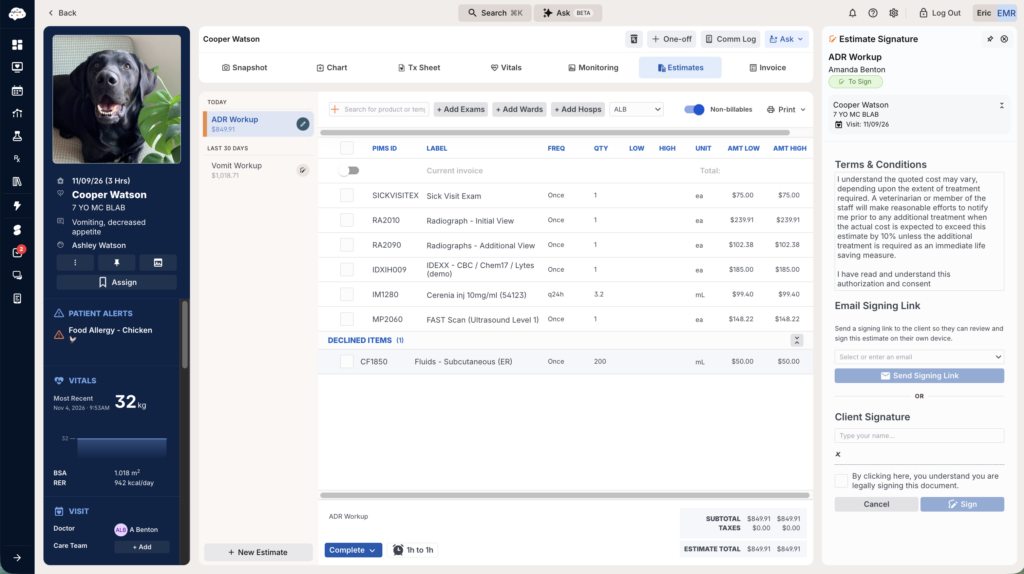
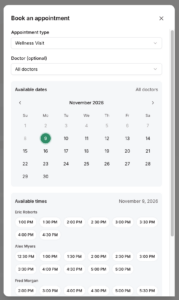
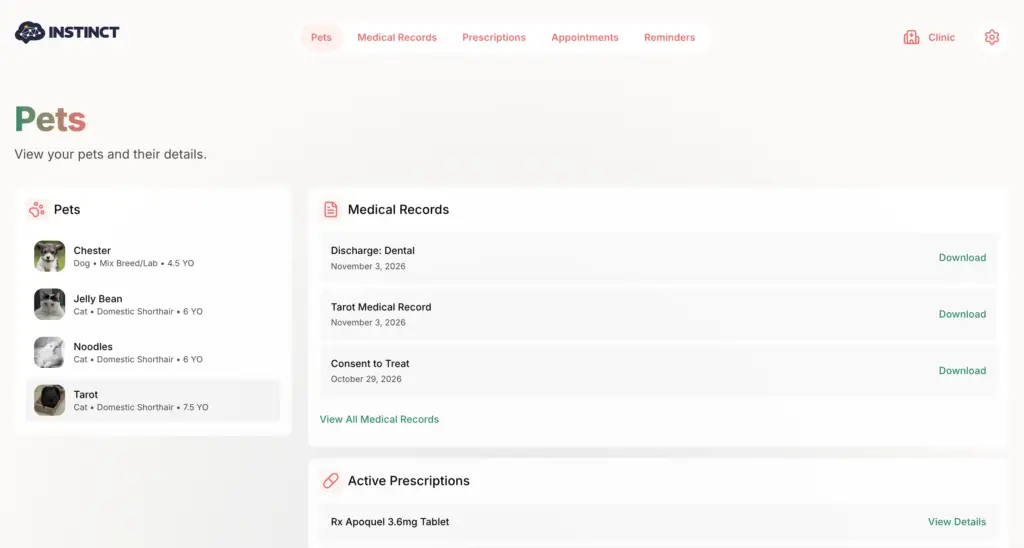
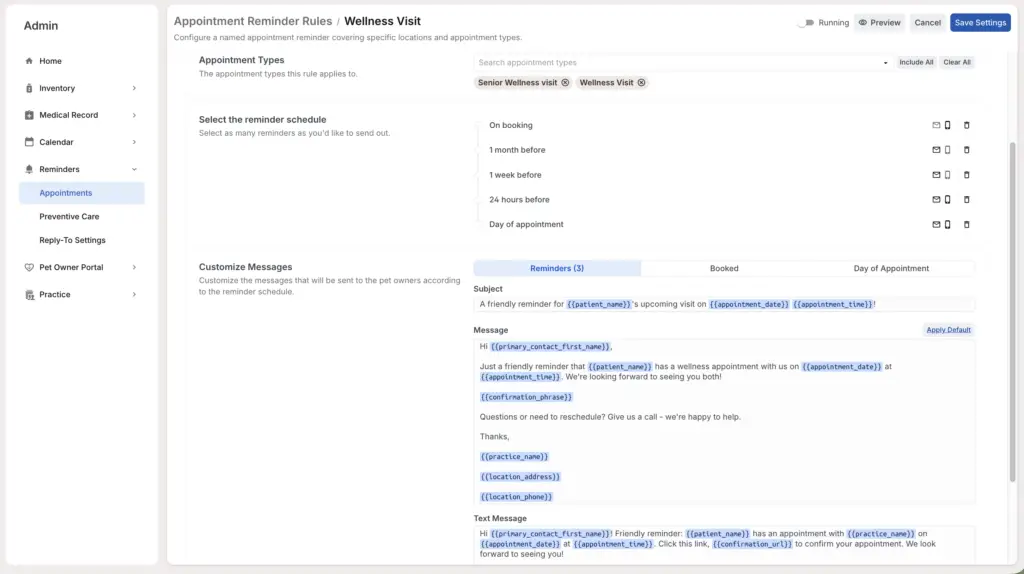
Keep core client communications connected in one place without paying for or managing separate platforms. Clients can review and digitally approve estimates that flow straight into treatment sheets or invoices. Built-in Global Reminders automate follow-ups and preventive care messaging, while the Pet Owner Portal lets clients view shared records, appointments, and prescriptions on their own—reducing routine calls and manual tracking.
A Simpler Way to Collect Payment
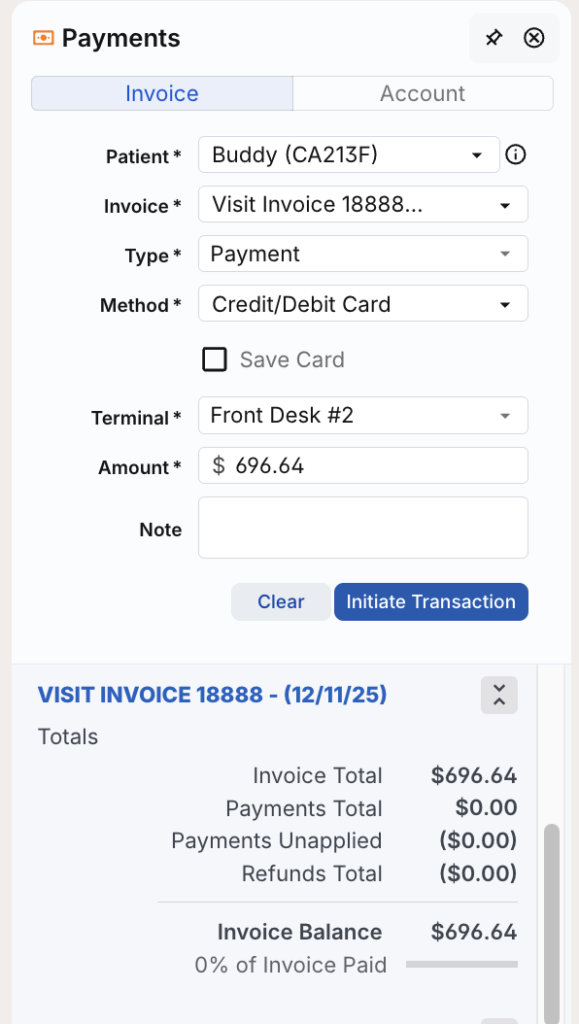
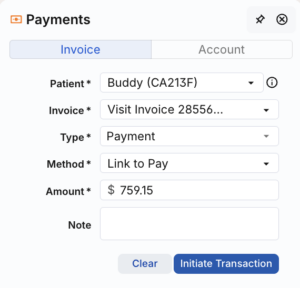
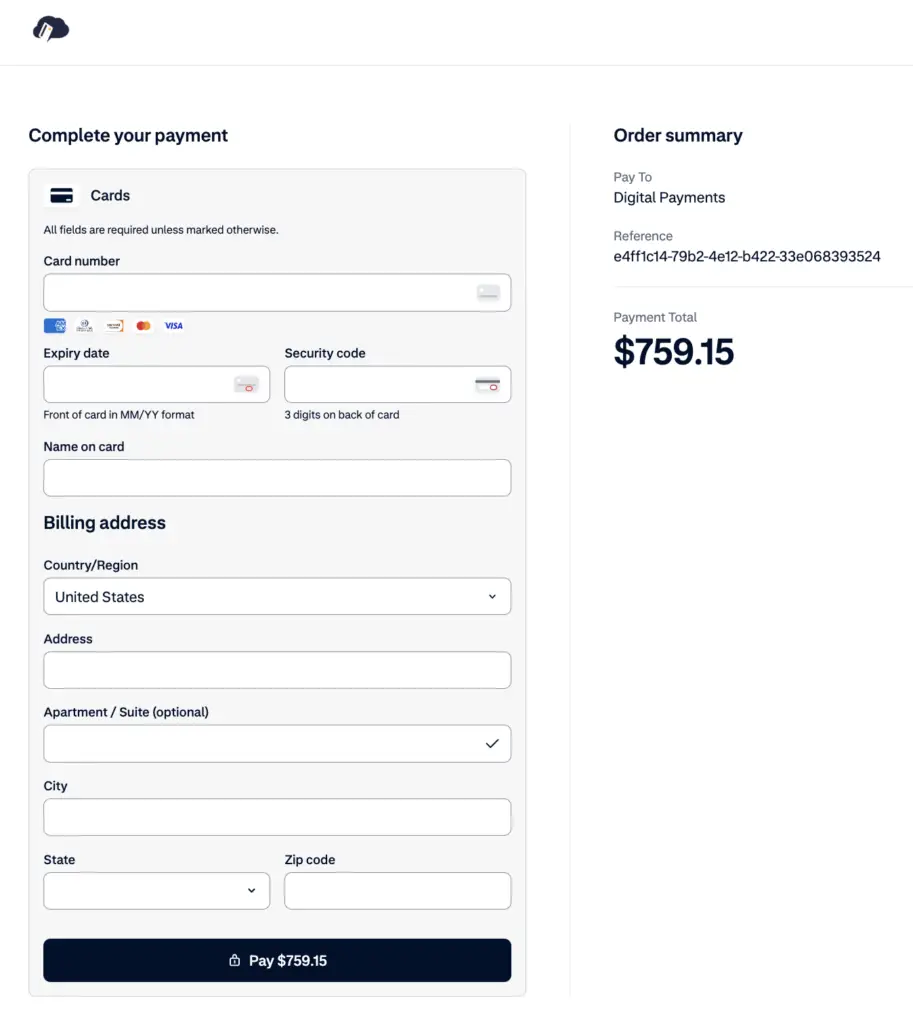
With Link to Pay, your team can send clients a secure payment link by email or text, all directly within Instinct EMR, with no extra charge for text messages. Once the client pays, the payment automatically settles the corresponding Instinct EMR invoice. There is no need to enter it into the PIMS afterward or figure out which payment belongs to which balance.
Inventory That Keeps Up With Your Team
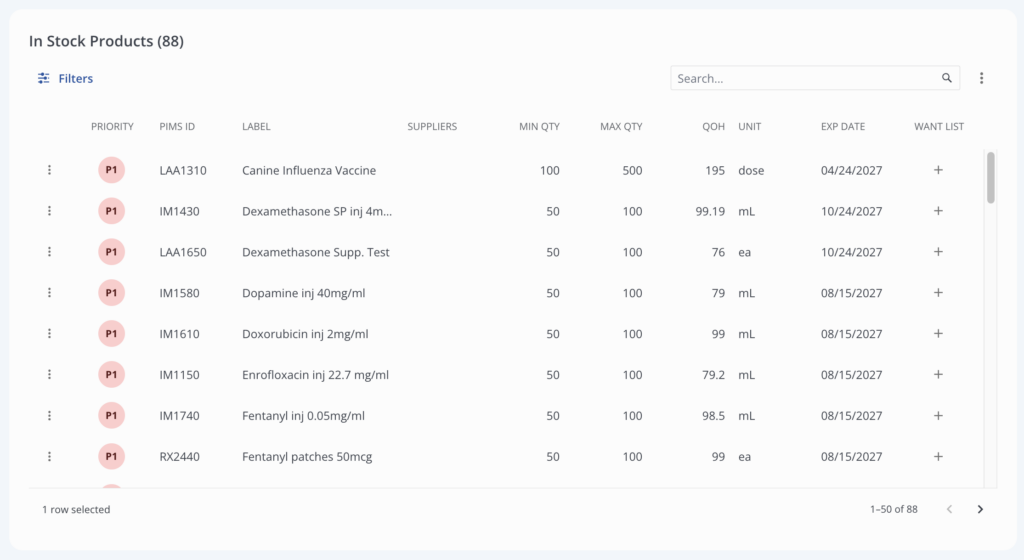
Instinct Stockroom tracks inventory as treatments are completed, so your counts reflect what is happening with patients throughout the day. Low-stock alerts, vendor order lists, invoice syncing, and product reconciliation help your team stay ahead of shortages without maintaining a separate inventory system or another spreadsheet. A new VetCove integration, currently in beta, also helps connect purchasing and inventory workflows more directly.
Integrations That Actually Reduce Work
Instinct EMR supports more than 40 integrations across AI documentation, diagnostics, imaging, pharmacy, inventory, payments, and client communication, designed to eliminate duplicate data entry:
- AI Scribing (ScribbleVet): Connects at no extra charge to sync appointments and send completed notes straight to the correct patient chart in a few clicks—no copying and pasting required.
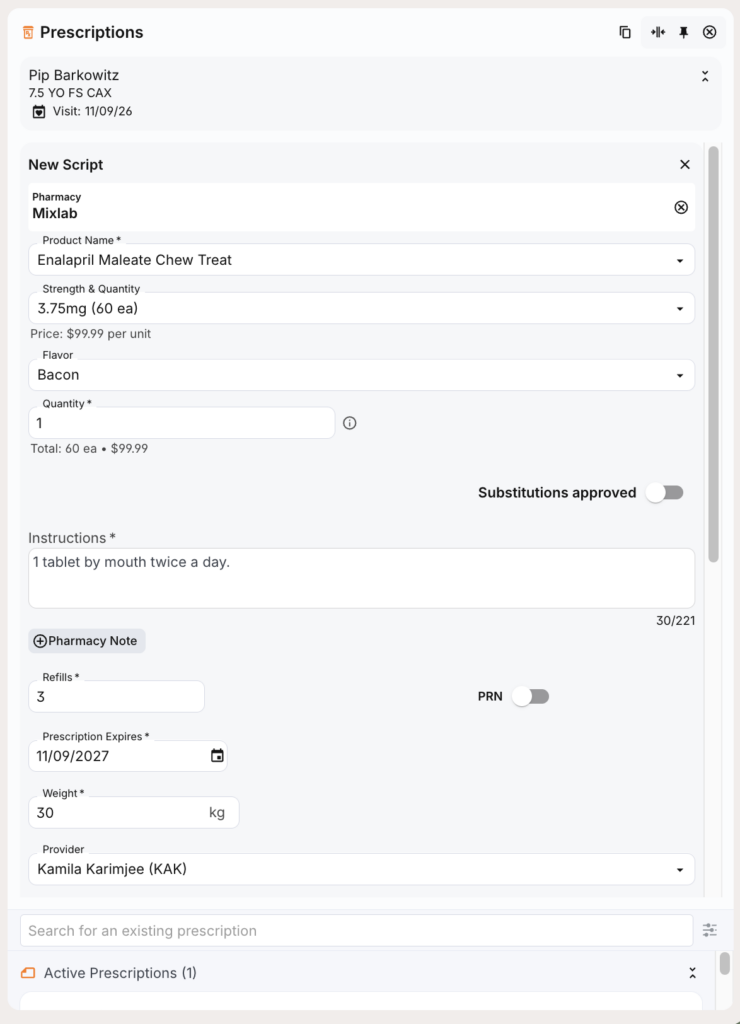
- Direct Pharmacy (Mixlab): Browse the pharmacy catalog and submit prescriptions directly from Instinct. Status updates flow straight back into the PIMS for complete visibility from submission through fulfillment.
As veterinary technology changes, Instinct EMR continues adding and improving connections so your PIMS can keep up with your practice, instead of the other way around.
Moving on from Legacy PIMS
Legacy PIMS were great for a while and got us through the transition from paper to computer. Technology keeps advancing, though. Veterinary medicine is moving quickly into the technological world with online scribing, AI summarization, and education tools.
Instinct EMR is built for the way veterinary medicine actually works: around the clock, from anywhere, with the integrations you need and the uptime you can’t afford to lose. Make the old server room a breakroom. You won’t regret it.