

If you work in small animal practice, you’ve probably handled plenty of blocked cats. But every case comes with its own set of decisions. What do you do if your patient isn’t urinating after the catheter comes out? Which medications make sense? What do you tell the client if another night of hospitalization isn’t in the budget? The diagnosis is rarely the hard part; it’s the decisions that follow. We built Standards of Care (formerly Plumb’s Pro) to give veterinarians clinical support as those decisions come up, and here’s what that looks like in Beans’ case.
Case Presentation: Feline Urethral Obstruction
Beans is a 4-year-old male neutered DSH who comes in after his owner noticed repeated trips to the litter box, vocalizing, and no urine production overnight. On exam, you find a large, firm, painful bladder, confirming your suspicion of urinary obstruction.
With the diagnosis clear, you open the Urethral Obstruction in Cats clinical monograph in Standards to review the immediate treatment plan, including recommended diagnostics, fluid therapy, pain control, and how to address metabolic abnormalities before catheter placement. With the initial plan in place, you’re ready for analgesia, sedation, and de-obstruction.
Want to see how Standards helps you work through the questions that come up during a case? See it in action with a free demo.
Keep Procedure Support Close at Hand
Even with a procedure you’ve done plenty of times, it’s nice to have a visual reference to double-check your approach and make sure you haven’t missed anything. The urinary catheter placement procedure guide in Standards covers catheter selection, positioning, placement, and confirmation, along with troubleshooting tips.
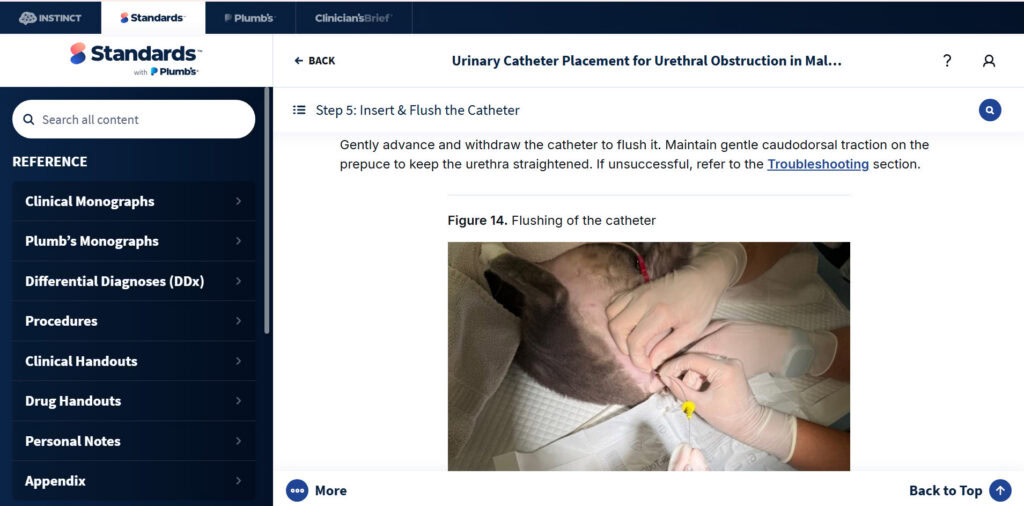
You use it as a quick refresher before moving ahead with de-obstruction and catheter placement. Beans is successfully unblocked and an indwelling urinary catheter is placed.
Wondering which procedure guides your colleagues reach for most often? Read the 7 Most-Viewed Veterinary Procedure Guides on Standards.
Keep Up With Changing Recommendations
Once Beans is settled in, you go back to the monograph to plan the rest of his treatment. You want to make sure you’re following the latest recommendations, but keeping up with every new study isn’t realistic when you’re seeing patients all day. That’s why Standards’ veterinary experts review the evidence and update the monographs as recommendations change.
For Beans, that means picking up new details on using lorazepam and realizing that prazosin is no longer routinely recommended. With Plumb’s built into Standards, you check dosing, administration, and safety details without leaving the case.
Expert Guidance for Real-World Questions
Once Beans is brighter and his urine has cleared, you decide to remove the catheter. A few hours later, he still hasn’t urinated and you start to wonder whether he’s re-obstructing or simply not interested in using the hospital litter box. You jump to the Expert Guidance to Clinical Presentations section of the monograph to work through what could be going on and what to do next.
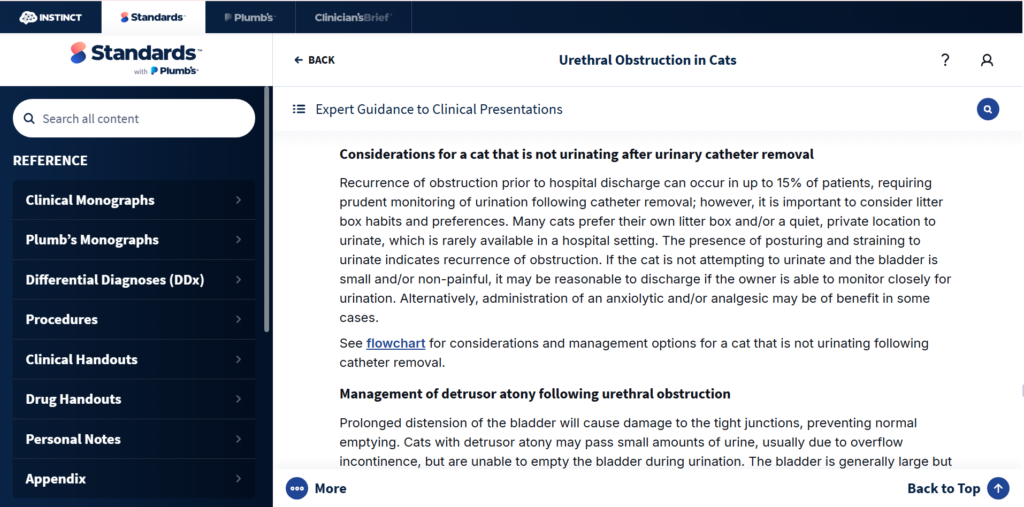
From there, an algorithm walks you through the next steps based on whether he’s attempting to urinate, what his bladder feels like, and how closely his owner can monitor him at home.
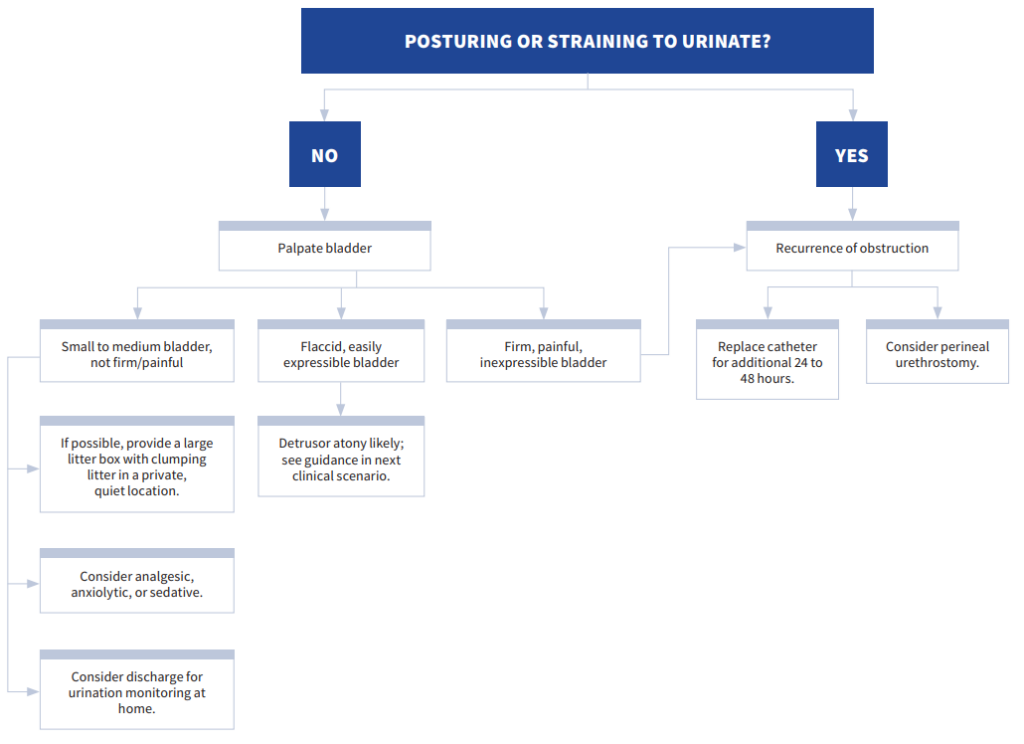
Beans isn’t trying to urinate and his bladder is small and comfortable, so the algorithm suggests trying things like a larger litter box in a quiet spot or additional analgesia/anxiolysis. After a little more time, Beans urinates on his own and you can start talking about discharge.
When the Client Needs Another Option
As you talk through the plan for going home, Beans’ owner asks what would happen if he blocked again and another full hospitalization wasn’t financially possible.
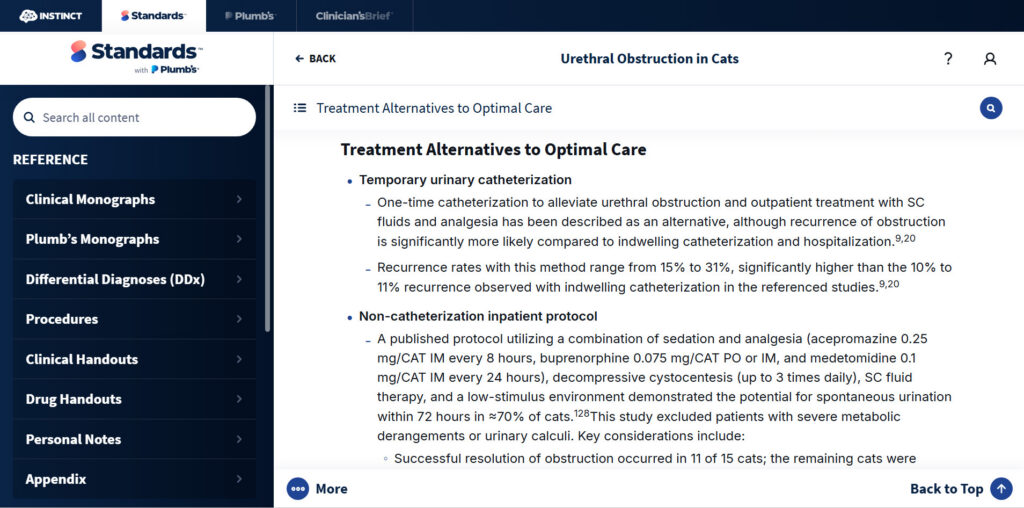
That’s another question Standards can help you work through. The Treatment Alternatives to Optimal Care section of the clinical monograph walks through other evidence-backed options when the recommended approach isn’t possible, along with the risks and limitations. It gives you something to work from when you’re trying to balance what’s medically appropriate for the patient with what the client can realistically manage.
Before Beans heads home, you print out a clinical handout on feline urinary obstruction for his owner. It covers what happened, why he could block again, and what to watch for at home, so his owner doesn’t have to remember everything you talked through at discharge. With his discharge plan in place, Beans is ready to head home.
Want another look at Standards in action? Read Trauma or Something More? A Veterinary Case Walkthrough With Standards.
Current Guidance for Real-World Cases
Even the cases you know well can send you back to the books. Recommendations change, clients have constraints, and often the question isn’t “What is this?” but “What do I do next?”
Standards gives you one place to check the current guidance, look a little deeper when you need to, and work through options that make sense for the patient and client in front of you.