

When a kitten comes in after suspected trauma, stabilization and assessment for life-threatening injuries are the top priorities. But when the initial diagnostics point in a different direction, you need a clear way to think through the possibilities. Standards of Care (formerly known as Plumb’s Pro) is part of Instinct Science’s family of veterinary tools, built to help teams work through clinical questions with expert-backed guidance at the point of care.
Here’s how it works in a real case.
Case Presentation: Kitten With Suspected Trauma
Debbie, a good Samaritan, brings in a 6-week-old kitten after it was accidentally hit by a bicycle. Neighbors had reportedly seen the kitten stumbling and acting abnormally earlier in the week, but Debbie hadn’t been able to find it.
When you see the kitten after the accident, it’s dull to comatose, severely dehydrated, and questionably visual. On physical examination, you find anisocoria, unilateral hyphema, and a large, bulbous head. You need to prioritize the most urgent concerns and decide what needs to happen next, so you open Standards.
Step 1: Use an Algorithm to Guide the First Steps
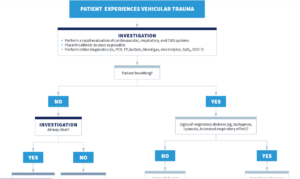
You search for trauma and open the vehicular trauma algorithm, which walks you through initial assessment, stabilization, and diagnostics. There are no clear signs of shock or arrhythmia, but you’re concerned about potential brain injury given the abnormal mentation and cranial nerve exam. You follow the neurologic injury pathway of the algorithm for step-by-step support through the initial treatment plan.
Step 2: Work Through Unexpected Findings
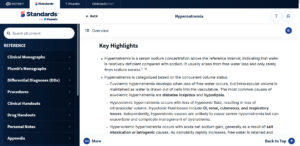
When the blood gas results come back, you’re not surprised to find dehydration, acidosis, and mild hyperlactatemia. But sodium and chloride are both too high to measure, and there isn’t an obvious explanation. You open the hypernatremia clinical monograph, where the key highlights help you quickly scan the main causes, including reduced water intake, diabetes insipidus, fluid losses, and sodium excess.
Want to see how Standards helps teams move from unexpected findings to next steps? See it in action with a free demo.
Step 3: Narrow the Differential List
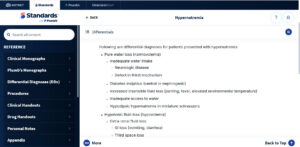
Then you open the hypernatremia differential diagnosis list to see what might fit this kitten. Given the kitten’s age, bulbous head, and abnormal behavior before the trauma, the water-intake and neurologic categories stand out, including inadequate water intake, neurologic disease, a defect in the thirst mechanism, and diabetes insipidus.
With those differentials in mind, you plan to ask Debbie whether she knows of any sodium exposure, such as salt water, salty foods, or another possible source of salt. If there’s no known exposure, the bloodwork makes you more concerned about an underlying congenital issue.
Want to see why a thorough differential list matters? Read How Differential Diagnosis Lists Can Reduce Veterinary Diagnostic Errors.
Step 4: Turn Hypernatremia Guidance Into a Plan
After you talk through the concerns and guarded prognosis, Debbie wants to continue care. You open the treatment section of the hypernatremia clinical monograph to review veterinary treatment guidelines for correcting sodium carefully, accounting for dehydration and maintenance needs, and avoiding overly rapid correction.
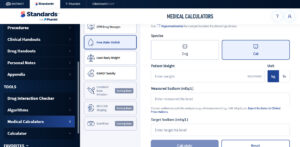
In this case, the sodium is too high to measure, so you can’t yet calculate the free water deficit. Standards gives you guidance for managing the case until the sodium is in a measurable range. Once it’s measurable, the free water deficit calculator helps you calculate and document the next part of the plan.
Step 5: Use Standards to Support the Rest of the Case
As the kitten’s care continues, Standards can help you prepare for the procedures that may come next. If the kitten needs a central venous line or nutritional support via a nasoesophageal or nasogastric feeding tube, Standards includes visual procedure guides to walk you through supplies, placement, confirmation, and patient care.
If the kitten goes home on medications, Plumb’s is built in, so you can review drug details and check for interactions before finalizing the plan. You can also print or email pet owner handouts directly from Standards, giving Debbie clear information to refer back to at home.
Wondering which procedure guides your colleagues use the most? Read 7 Most-Viewed Veterinary Procedure Guides on Standards.
From Urgent Questions to Clear Next Steps
This kitten still needs ongoing care, but you have a better sense of what you’re treating, what comes next, and how to talk Debbie through it.
When a case doesn’t follow the path you expected, Standards helps your team stay oriented and move from unexpected findings to confident next steps, with support for the decisions, details, and client conversations along the way.
Ready to see how Standards can support your next case? Watch a free demo.
This case walkthrough was adapted from a Standards of Care webinar led by Rachel Halpin, DVM, DACVECC. A special thanks to Dr. Halpin for her clinical insight and review.