

Whether it’s an older Labrador with stridor or a bulldog struggling to breathe on a hot day, an upper airway obstruction forces you to make decisions fast. You’re weighing what you want to do against the stress it might cause, all while your patient works harder and harder to breathe.
We’ve been in those moments, and they’re exactly why we built Standards of Care (formerly Plumb’s Pro), a veterinary clinical decision support tool that gives teams peer-reviewed guidance for time-sensitive decisions without digging through multiple resources.
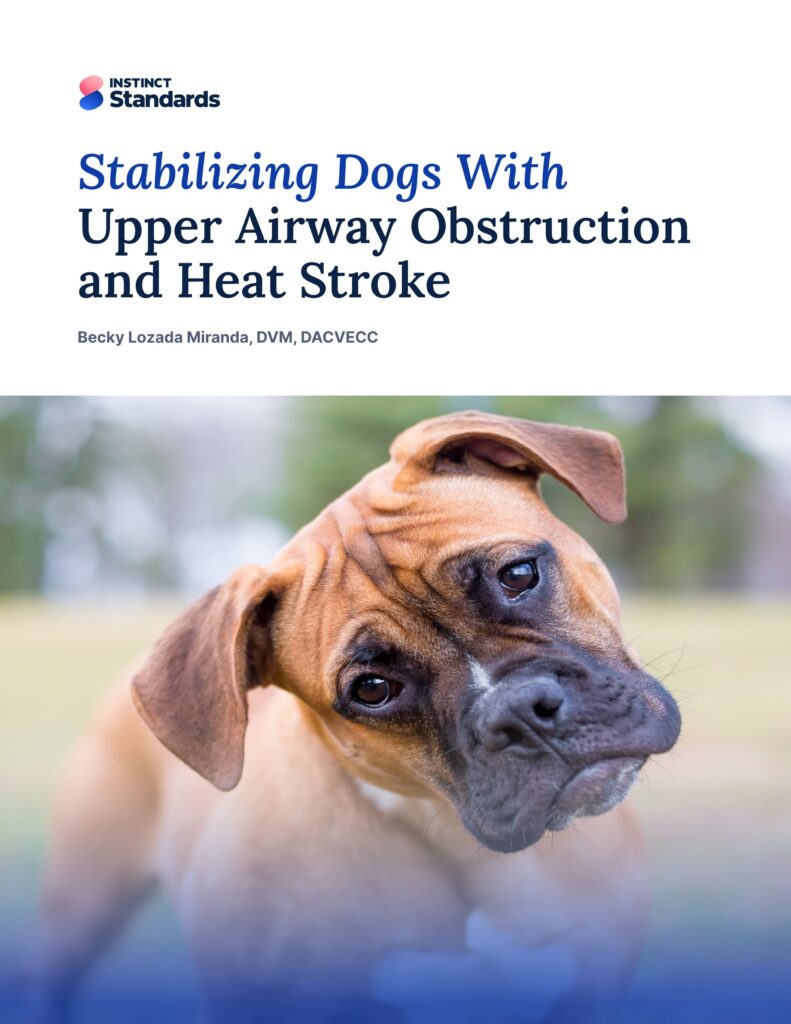
We also created Stabilizing Dogs With Upper Airway Obstruction & Heat Stroke, a step-by-step guide to those first decisions. It walks through low-stress assessment, oxygen support, sedation, intubation, temperature monitoring, and active cooling when hyperthermia is part of the case.
What Makes These Cases So Challenging
In an upper airway emergency, you’re trying to figure out what’s causing the obstruction while also deciding what needs to happen first. Regardless of the underlying cause, a lot of the first questions are the same. Is flow-by oxygen enough for now? Should I sedate? How much handling can the patient tolerate? And when is it time to intubate? That’s what this guide is built to help with, one decision at a time.
What’s Inside the Guide
The guide walks through stabilization step by step, including:
- Recognizing upper airway obstruction: What to look for in the breathing pattern and signs the patient may be getting worse
- Initial stabilization: How to limit stress, provide oxygen and sedation, and assess how stable the patient is
- Emergency airway management: When to intubate and how to support the patient once the airway is secured
- Temperature monitoring and cooling: How to manage concurrent hyperthermia, including when to start and stop active cooling
- Additional treatment considerations: Medications that may help reduce airway swelling or lower aspiration risk during transport
From Stabilization to Ongoing Care
Once the immediate crisis is under control, you still need to figure out what’s driving the obstruction and what ongoing care your patient will need. Throughout the guide, you’ll see how Standards of Care and Plumb’s can help with those next decisions, from working through the underlying condition to checking drug information and dosing as the treatment plan comes together.
Download Stabilizing Dogs With Upper Airway Obstruction & Heat Stroke and keep it close for the next case that comes through the door.