
Veterinary teams are good at catching small problems before they reach the patient. A dose is double-checked, a handoff detail is clarified, or a chart note is corrected before the next person picks up the case.
But patient safety shouldn’t depend on last-second catches. That’s why we created Veterinary Patient Safety: A Practical Guide & Checklist, a free guide to help veterinary teams identify where safety risks surface during a busy day and how better systems can help them catch more while there’s still time to act.
Download the free guide and checklist here.
How Veterinary Patient Safety Risks Hide In The Details
Not every safety risk starts with a dramatic emergency. It might be an outdated weight that affects a dose, a patient alert that isn’t seen before someone reaches for the leash, or a treatment that gets missed during shift change. It might be an anesthesia sheet that’s hard to review during recovery, or a client concern that never makes it into the record and gets missed at the recheck.
None of that means the team wasn’t careful. It means the day was busy, and the system didn’t make the risk easy enough to see.
It’s not about asking veterinary teams to care more. It’s about building systems that make the right information easier to see, the next step easier to follow, and small problems easier to catch.
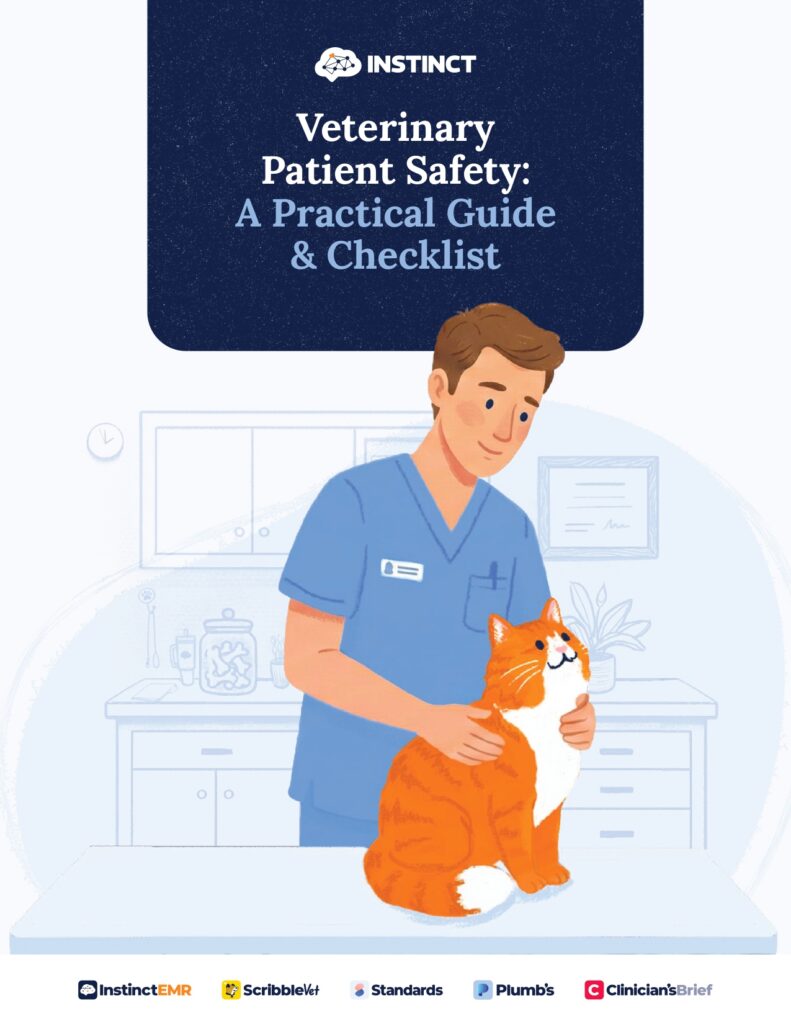
What’s Inside the Veterinary Patient Safety Guide
The guide examines five areas where veterinary patient safety risks can show up during a busy hospital day:
- Medication decisions: where dosing, weight changes, medication histories, and controlled substance access can create risk
- Patient care, handling, and handoffs: how key details can get missed as dogs, cats, and other veterinary patients move between people, places, and shifts
- High-risk procedures and anesthesia: why timing, monitoring, medication administration, and recovery details need structure in real time
- Clinical guidance and protocol consistency: how outdated, scattered, or unsourced information can pull a plan in the wrong direction
- Documentation, record review, and follow-through: why the record matters before, during, and after the visit
For each area, you’ll see what can go wrong, what safer systems can help catch, and how veterinary practice management software like Instinct EMR can support the team before small gaps turn into bigger problems.
You’ll also get a printable checklist to help your team turn the guide into a focused safety conversation, whether you use it in a team meeting, safety review, or planning session.
Download Veterinary Patient Safety: A Practical Guide & Checklist to start a conversation about building safer systems in your hospital.