

Paper treatment sheets have helped veterinary teams coordinate care for decades. They’re familiar, easy to grab, and built into the rhythm of every shift. But keeping them accurate depends on every change being documented clearly and passed along before the next person steps in. Here’s where that process starts to break down and what changes when veterinary practices move to digital treatment sheets.
Where Paper Starts to Fall Short
A paper sheet can only be in one place at a time, even when several people are caring for the same patient. As it moves from room to room, crossed-out instructions, added doses, and handwritten initials can leave the next person trying to figure out what happened.
Whiteboards help, but only if they’re current and you’re close enough to read them. Small gaps can mean a delayed medication, an unclear handoff, or a change in the treatment plan that the next person doesn’t see in time. It’s not because the team is careless. It’s because the workflow depends too heavily on memory, handwriting, and manual updates.
Why Paper Stays, Even When It Slows You Down
Even when paper creates extra work, changing such a central part of patient care can feel riskier than sticking with what the team already knows. The treatment sheet touches veterinarians, technicians, assistants, and front desk teams, so the change has to work for everyone.
For some hospitals, there’s another concern: leaving paper means replacing the entire PIMS. But leaving paper doesn’t have to mean replacing everything else.
Instinct Treatment Plan is a digital treatment system that replaces paper treatment sheets and whiteboards with a shared, real-time view of patient care. It works alongside your current PIMS, so you can modernize treatment tracking without changing everything else at once.
It’s also used in more than half of U.S. veterinary teaching hospitals, so many new graduate veterinarians are already familiar with it.
Ready to leave paper behind without replacing your current PIMS? Book a demo of Instinct Treatment Plan.
What Changes With Instinct Treatment Plan
1. See What’s Due, Done, or Overdue
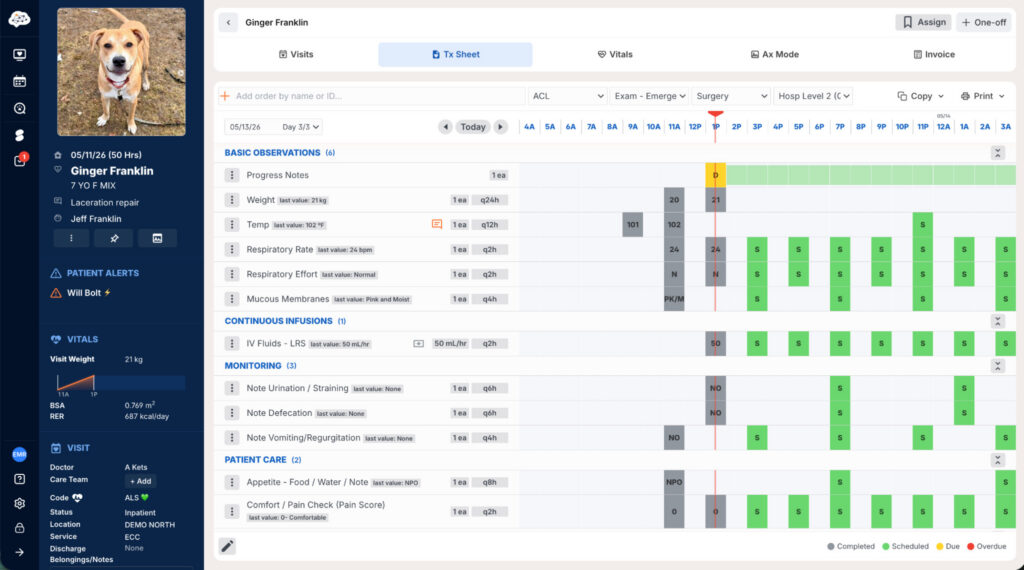
Instinct Treatment Plan replaces the paper sheet with a digital veterinary treatment sheet that updates as care happens. That means the whole team can see what’s coming up, what’s due now, what’s been completed, and what’s overdue. Technicians can see what needs attention next without scanning a handwritten page, while veterinarians can review the current plan without tracking down a clipboard.
Teams can also build plans faster with reusable treatment groups for common workflows, hospitalized patients, and recurring care needs. Instead of rebuilding the same plan every time, they can start with a familiar structure and adjust it for the patient in front of them.
2. Put Safety Checks Into the Workflow
When you’re using paper, dose calculations and drug checks often happen in separate places, then have to be copied back into the treatment plan.
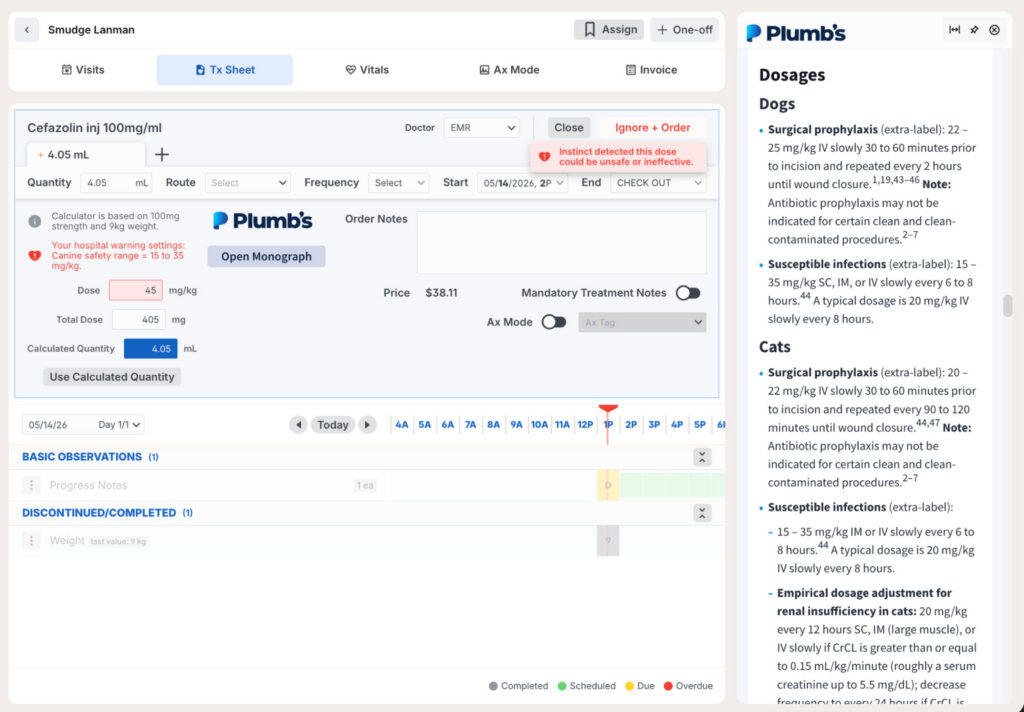
Instinct Treatment Plan brings Plumb’s drug information, calculators, dose-range alerts, and species-specific warnings together in one place. While building the plan, the team can calculate doses, review drug details, check for interactions, and see when a dose falls outside the expected range.
These tools don’t replace clinical judgment, but they make it easier to spot a dose that deserves another look or confirm drug information before the plan moves forward.
Not sure whether Instinct Treatment Plan or Instinct EMR is the better fit? Take this 5-minute quiz to find the right Instinct software for your practice.
3. Give the Whole Hospital the Same Patient View
Instinct Treatment Plan replaces the physical whiteboard with real-time patient boards that show who’s checked in, where care stands, and which treatments need attention.
Instead of walking across the hospital to check a board or asking around for an update, technicians and veterinarians can see the current patient status from wherever they’re working. The incoming shift can also see what was completed, what changed, and what still needs attention, without decoding crossed-out instructions or relying on a rushed verbal update.
Because Instinct Treatment Plan is cloud-based, the team can access the current plan from anywhere in the practice. Updates happen automatically, without on-site servers or IT infrastructure to maintain.
4. Bring Anesthesia Monitoring Into the Same System
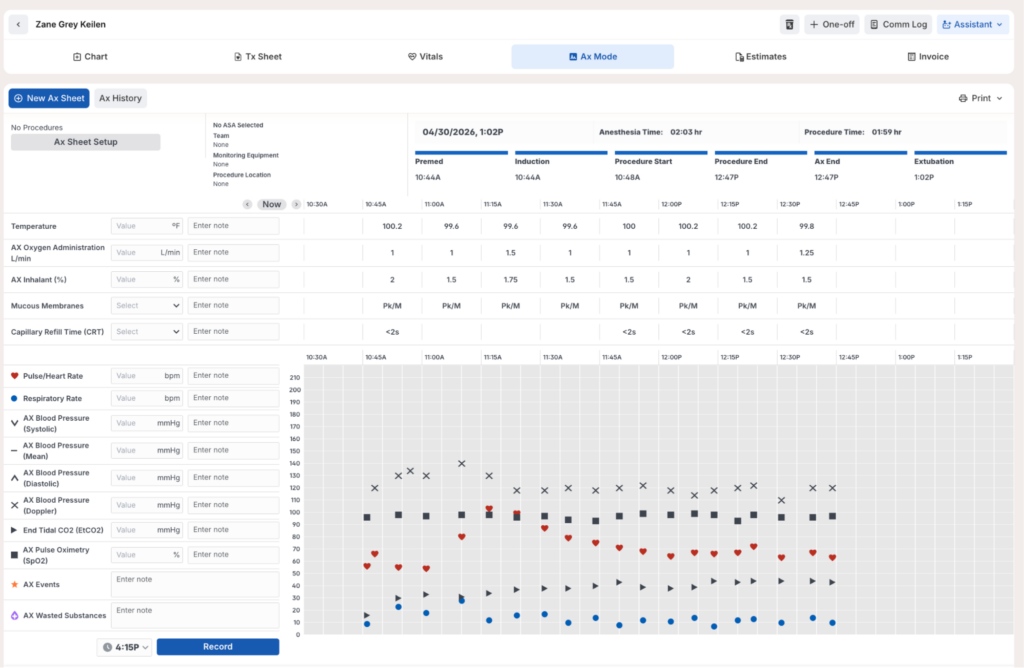
Paper veterinary treatment sheets aren’t the only records teams have to keep current. Instinct Treatment Plan also includes Ax Mode, a digital anesthesia sheet for recording vitals, medications, events, notes, and recovery details in real time.
Timers, alerts, and medication calculators help reduce manual tracking so the team can focus on the patient. The result is a clearer, more consistent anesthesia record that’s easier to review during handoffs, transfers, post-op care, and internal audits.
Ax Mode can also support sedation-only cases and more specialized monitoring, including CRIs, ventilator settings, fluids, blood gases, and other custom vitals.
5. Leave Paper Without Replacing Your PIMS
Moving to digital treatment sheets doesn’t have to mean replacing the system your hospital already uses. Instinct Treatment Plan works alongside your current PIMS, adding digital treatment tracking, patient boards, safety tools, and anesthesia monitoring while the rest of your system stays in place.
The move can also happen faster than teams may expect. With migration, implementation, and training support, hospitals can be up and running in as little as six weeks.
Leave the Paper Behind
Veterinary teams still need one shared place to coordinate patient care. What they don’t need is a workflow that depends on a clipboard being in the right place, a whiteboard being up to date, and every update being written down and passed along manually.
Instinct Treatment Plan gives the whole team a clearer view of what’s due, what’s been completed, and what needs attention next. And because it works alongside your current PIMS, you can leave paper behind without replacing everything else.
That means less time tracking down information and fewer gaps between shifts. When questions come up mid-shift or at 2 AM, your team has access to live support 24/7.
Ready to leave the paper treatment sheet behind? Book a demo to see Instinct Treatment Plan in action.